Permissions and approved tools
Define who can use the workflow, which records it can access, and which tools and destinations it can use. Keep credentials outside model context and enforce access in the application.
AI business systems | Nationwide
We design human-controlled workflows that can use OpenAI or Anthropic Claude to improve follow-up, team judgment, marketing operations, document work, and the next business decision.
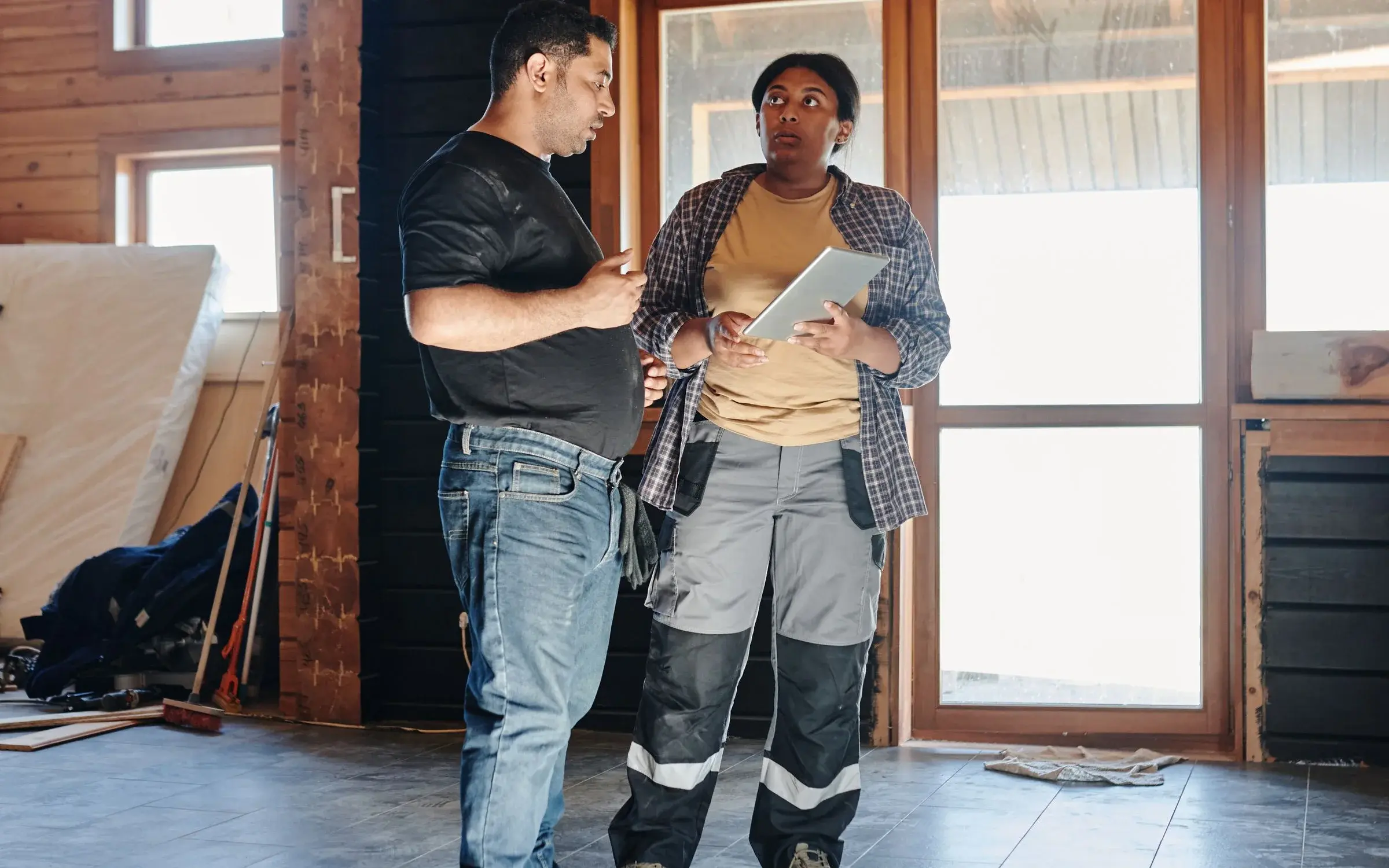
AI-assisted illustrative brand scene created from authorized source material. It does not depict a documented customer result.
Scoped implementation service
Put one revenue workflow into operation with approved access, human checkpoints, and a clear way to stop. We define and test the controls for your tools before expanding live access.
Define who can use the workflow, which records it can access, and which tools and destinations it can use. Keep credentials outside model context and enforce access in the application.
Route customer messages, proposal terms, contract commitments, invoices, and access changes to a named reviewer. Approval applies to the exact action; a changed draft requires another review.
Record the proposed action, reviewer, decision, timestamp, and result with sensitive data minimized. Compare response time, proposal turnaround, stage conversion, and overdue follow-up against a baseline.
Set action and spend limits, test a shutdown control, and document how an operator pauses work, revokes access, handles failed actions, and returns the process to a person.
First delivery: a workflow map, permission matrix, approval rules, activity-record plan, failure tests, and operator handoff. This is a scoped implementation engagement. Customer integrations and production activation depend on discovery and acceptance testing.
Scope a controlled AI pilotAI attached to revenue work
Start with the stalled handoff. We scope a connection around your existing CRM, proposal, contract, delivery, and billing tools, with a named owner and approval point at each step.
Organize approved account research and intake; a person confirms fit and the next contact.
Prepare scope and follow-up drafts; the owner approves pricing and the final proposal.
Flag missing fields and prepare a handoff; authorized people review terms and sign.
Carry approved scope into delivery with an owner, due date, and exception path.
Prepare billing details from completed work; an authorized person checks and issues the invoice.
Surface service dates and follow-up drafts; a person confirms the offer and customer message.
Measure first-response time, proposal turnaround, stage conversion, days to invoice, and renewal follow-through from available records. Establish a baseline, run one bounded pilot, and decide whether to keep, revise, or stop from observed results.
The FieldKnown product supports market research, draft preparation, and pipeline visibility. Contract signing, job management, invoicing, and renewal integrations are scoped service work, not included product capabilities.
A direct definition
It is a repeatable workflow with an approved source of truth, explicit rules, a tested model-assisted step, a responsible human checkpoint, and an outcome the business can inspect. If those pieces are missing, the AI may create activity without improving the work.
Start with a repeated task that has a visible cost, delay, or quality problem. AI is not the starting point.
Use owner-verified source material, decision rules, examples, and boundaries instead of generic internet answers.
Compare an OpenAI-compatible or Anthropic Claude-compatible path against the same redacted cases and output contract.
Keep a named person in control of customer messages, commitments, payments, permissions, and uncertain decisions.
Provider-neutral by design
We evaluate the workflow first. No model wins every task, and no production key or spend is required to prove the process with safe examples.
OpenAI-compatible path
Use a client-owned OpenAI account only after the inputs, output contract, usage limits, data handling, human review, and expected operating cost are approved.
Anthropic Claude-compatible path
Use a client-owned Anthropic account under the same source, permission, escalation, testing, budget, and human-approval rules. Provider choice does not remove governance.
Same redacted cases
Same output contract
Accuracy + missing facts
Escalation behavior
Latency + cost after approval
Current boundary: production OpenAI and Anthropic model calls, API keys, and model spend are not active in this public Builder. FieldKnown is independent and is not affiliated with or endorsed by either provider.
Where the work can start
The first project should improve a real handoff or decision. These examples can fit contractors, professional services, health and wellness, automotive, real estate, hospitality, retail, and local B2B teams.
Summarize an inquiry, identify missing facts, prepare the next approved question, and keep ownership visible.
Observable goal: Faster, clearer handoff
Turn experienced judgment into examples, review rules, concise response guidance, and an escalation path employees can follow.
Observable goal: More consistent decisions
Organize real proof, draft useful service answers, maintain content briefs, and prepare owner-reviewed campaign material.
Observable goal: Useful content with a source
Extract known details, flag missing information, prepare a structured first draft, and route exceptions to the right person.
Observable goal: Less repetitive preparation
Summarize what changed, surface stalled work, and prepare next-action recommendations without inventing performance data.
Observable goal: A clearer weekly decision
Prepare concise, policy-aware replies while complaints, sensitive questions, and commitments remain with a human.
Observable goal: Less over-explaining
The five-step method
This sequence keeps the project understandable for an owner and testable for the team that must actually use it.
Trace the current work, the people involved, the approved source of truth, and the failure that matters enough to fix.
Create a small workflow with synthetic or redacted inputs, a typed output, clear stop rules, and visible human review.
Check accuracy, missing facts, escalation, tone, repeatability, speed, and expected cost before choosing a provider path.
Use the workflow manually with a small approved scope. Record corrections, time saved, failures, and operator confidence.
Connect client-owned accounts and approved tools only after permissions, budgets, rollback, monitoring, and acceptance tests are ready.
AI-search readiness
AI-search visibility begins with the same discipline as trustworthy search: useful public information, consistent identity, original evidence, accessible pages, and accurate technical signals. A special file or a burst of generic articles cannot manufacture authority.
Search engines and AI assistants decide what to crawl, index, rank, or cite. We build eligibility and evidence; we do not promise placement.
Read the first FieldKnown guideA clear company identity and consistent public contact information
Focused service pages that answer real buyer questions
Original case studies, named expertise, and inspectable proof
Accessible server-rendered content, canonical URLs, and a clean sitemap
Structured data that matches visible page facts
Separate crawler choices for AI search access and model-training access
What is working today
LIVE BUILD
A public website, local service content, homeowner intake, and contractor routing path.
CONTROLLED DEMO
A synthetic lead follow-up demonstration with mock providers and visible human-control boundaries.
DEFERRED
No live provider key, automated outreach, hosted lead write, analytics, or billing is represented as active.
Straight answers
It is a defined business workflow that combines approved knowledge, decision rules, a model-assisted step, human review, and a measurable outcome. It is not simply a chatbot or a collection of prompts.
Either can be evaluated. We do not declare a universal winner. The choice depends on the workflow, approved data, output requirements, evaluation results, operating budget, and the account the client is prepared to own.
Yes. The safest first step is usually a manual or mock workflow using synthetic or redacted examples. Live model calls and spend begin only after the business case, limits, owner, and acceptance tests are approved.
Not by default. Customer communication, commitments, payments, access changes, and uncertain or sensitive decisions stay behind explicit permissions and human review. The public FieldKnown site does not currently send automated messages.
No. Contractors are the first working proof because their lead and follow-up problems are easy to inspect. The same method can fit professional services, healthcare and wellness, automotive, real estate, hospitality, retail, local B2B, and other owner-led companies.
No. No provider controls or can guarantee rankings, citations, traffic, leads, or revenue. We can build a technically accessible site, publish useful first-party evidence, make company facts clear, and monitor what search systems can reach after the launch gate is approved.
Choose one repeated workflow with a responsible owner, enough examples to test, a clear failure today, and a result the business can observe within a bounded pilot.
FieldKnown-managed first review